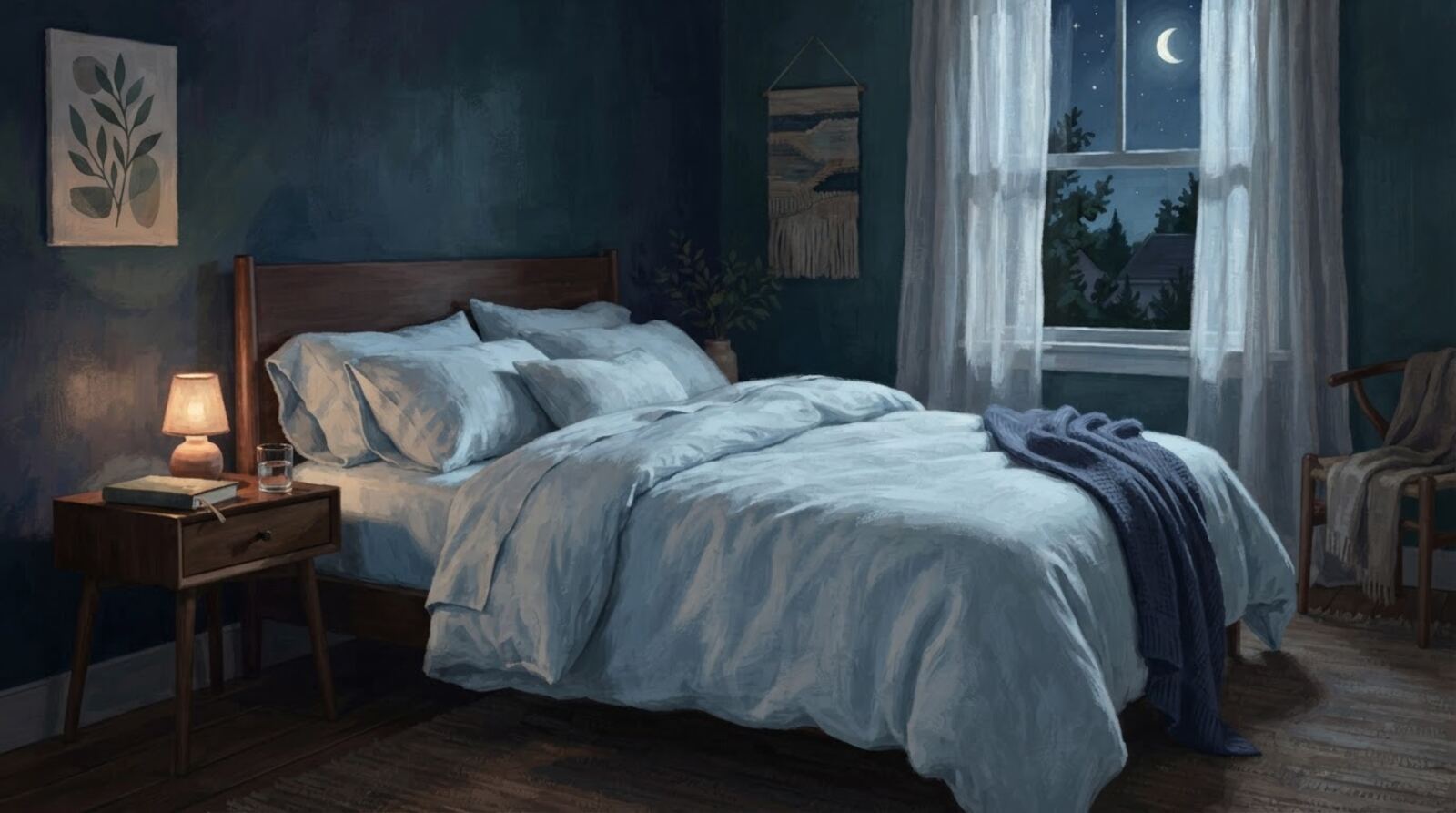
Do Sleep Sounds and Ambient Music Work? How to Use Them Well

Search for sleep music and you will find hours of rain, ocean waves, soft piano and slow ambient mixes. Millions of people play them every night. Are they just a comforting habit, or can sound really help? The honest answer is that results vary from person to person, but there are sensible reasons they help many people.
What sound can do
- Mask sudden noises such as traffic, neighbors or a snoring partner.
- Give a restless mind something gentle to follow.
- Work as a nightly cue that it is time to wind down.
- Reduce the feeling of total silence, which some people find unsettling.
What sound cannot do
Sound is a helper, not a cure. It will not fix a late caffeine habit, a very bright bedroom, or an underlying sleep disorder. Research on specific sound types such as white, pink or brown noise is still mixed, so treat claims of guaranteed results with caution.
Choosing a type of sound
- Steady noise (white, pink, brown, fan) is good for covering interruptions.
- Nature sounds (rain, wind, water) feel soothing and have no melody to follow.
- Slow ambient music is good for the wind-down hour; pick tracks without sudden changes.
- Avoid anything with spoken words or ads if you are easily woken.
Practical tips
Keep the volume low, about the level of quiet conversation or softer. Place the speaker a few feet away instead of right beside your pillow. If you use headphones, choose a comfortable sleep-specific type, and set a timer if you would rather not have audio running all night. Dim your screen or turn it off so the light does not undo the effect.
Sound for focus too
The same sounds can help during work or study. Long ambient mixes remove the need to pick songs, and many people find steady sound makes it easier to settle in. On our companion YouTube channel, Ancient Hours, we publish hour-long ambient mixes inspired by ancient places, designed for exactly this kind of background use.
This article is for general information and is not medical advice. If sleep problems last for weeks, or you feel unusually sleepy during the day, talk with a doctor or a licensed sleep specialist.