Can't Sleep at Night? 7 Common Reasons and What to Try Tonight

When you cannot sleep, it is easy to feel that something is wrong with you. In most cases the cause is ordinary and fixable. Here are seven of the most common reasons people struggle at night, along with a practical thing to try for each. Remember that occasional bad nights are normal. Long-lasting trouble deserves a conversation with a health professional.
1. An irregular schedule
Sleeping until noon on weekends and then trying to fall asleep at 10 p.m. on Sunday is a bit like flying across time zones every week. Try keeping wake-up time within about an hour of your weekday time.
2. Too much light in the evening
Bright lights and bright screens late at night can delay the natural rise of sleepiness. Dim the house after dinner, switch to warm lamps, and keep your phone on a low-brightness setting or away from the bed.
3. Caffeine and alcohol
Caffeine can linger into the night. Alcohol may make you feel drowsy at first, but it often fragments sleep later in the night and leaves you less rested. If you notice poor sleep after drinks, try finishing earlier in the evening or skipping it on nights when sleep matters most.
4. Stress and an overactive mind
Stress keeps your body in alert mode. A short brain-dump on paper, slow breathing, or a gentle audio track can help you shift gears. If anxiety is a regular part of your nights, it is worth talking with a professional, because effective support exists.
5. A bedroom that works against you
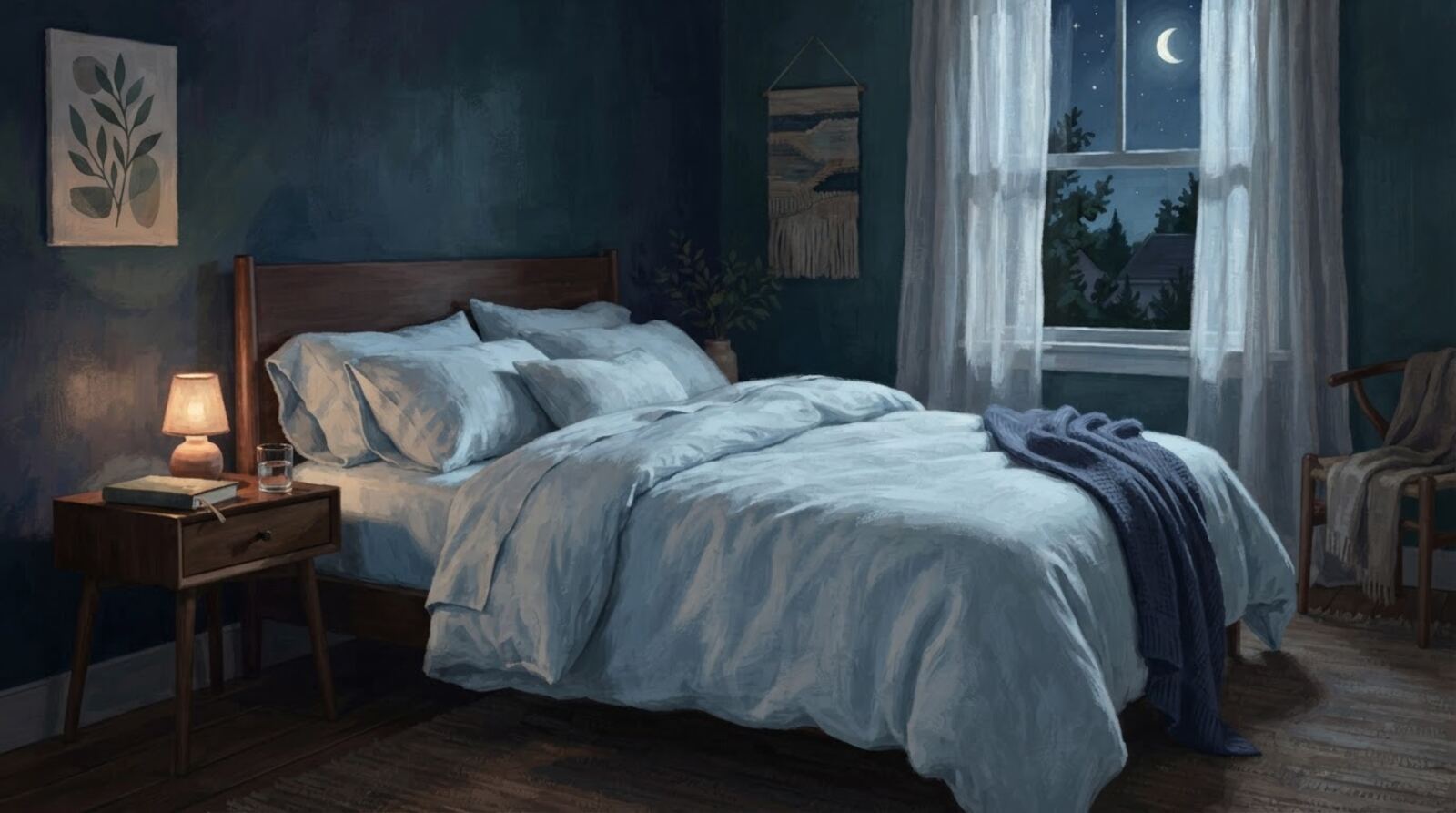
A warm room, a noisy street, glowing electronics and an uncomfortable mattress all make sleep harder. Fix the cheapest problems first: lower the temperature, cover small lights, and use a fan or soft ambient sound to mask noise.
6. Eating or exercising too close to bedtime
A big, heavy meal right before bed can cause discomfort for some people. Very intense exercise late in the evening can also leave you alert. Try finishing large meals two to three hours before bed and keeping late workouts gentle.
7. Naps that run too long or too late
A short nap of about 20 minutes early in the afternoon can be refreshing. Long naps late in the day can steal sleep pressure you need at night. If you struggle at night, experiment with shortening or skipping naps.
When to get help
See a doctor if you regularly take more than 30 minutes to fall asleep for several weeks, if you snore loudly and wake gasping, if you feel very sleepy while driving or working, or if low mood or anxiety is part of the picture. Conditions such as insomnia and sleep apnea are common and treatable.
This article is for general information and is not medical advice. If sleep problems last for weeks, or you feel unusually sleepy during the day, talk with a doctor or a licensed sleep specialist.